Recipes
Traditional Gundruk Recipe: How to Make Nepal's Beloved Fermented Greens
May 28, 2026 8 min read

Dal bhat is Nepal's national dish — eaten twice a day by millions, central to every celebration, and the fuel of Everest climbers and farmers alike. Here's the definitive guide to making authentic Nepali dal bhat at home, with its history, nutrition science, eating etiquette, and every component from scratch.
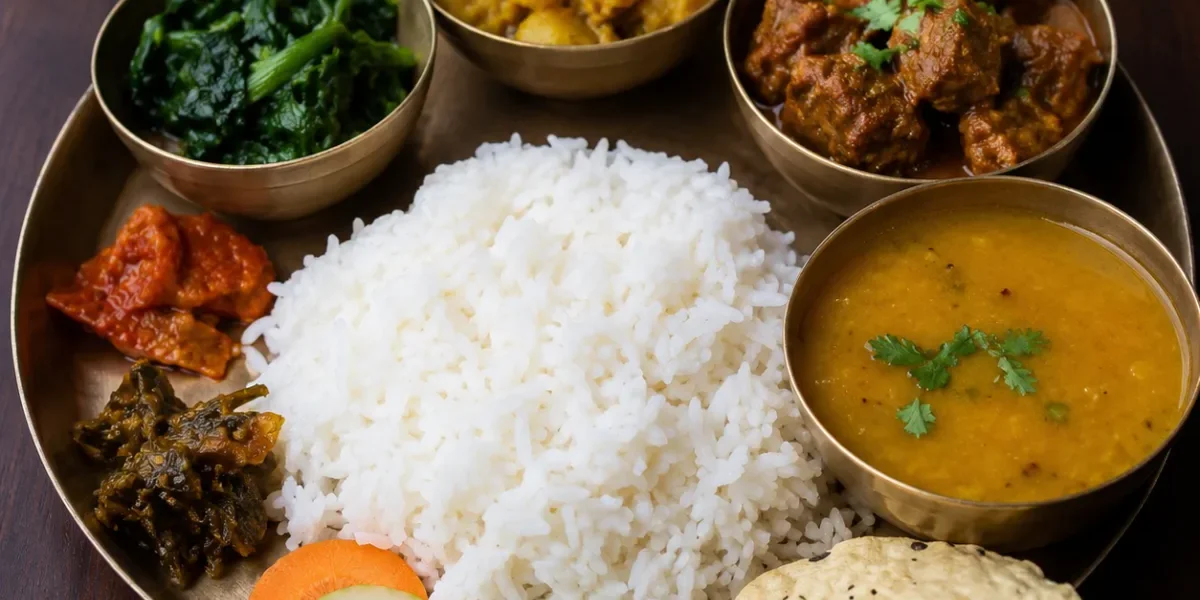
"Dal bhat power, 24 hour" is the Nepali saying — and it's both a joke and a truth. Nepal's national dish is eaten morning and evening across every social class and geography, from Kathmandu valley apartments to high-altitude shepherd camps. The combination of steamed rice, thin lentil broth, seasonal vegetable curry, and punchy pickle on a metal thali is the complete expression of Nepali flavour.
This recipe covers all four components: dal (lentil soup), bhat (steamed rice), tarkari (vegetable curry), and achar (tomato pickle).
The pairing of lentils and rice is thought to have been adopted from broader South Asian culinary tradition, but in Nepal it became something distinct: a simple, energy-dense meal that fed farmers through long days in the fields. As communities settled in fertile regions like the Terai and the Kathmandu Valley, and terrace farming techniques spread across the hills, rice became far more widely available — and dal bhat gradually became the everyday meal of the entire country, not just the plains.
During festivals like Dashain and Tihar, families gather to share dal bhat, often with mutton curry or fried fish added to the plate. It also holds a special place at weddings and religious ceremonies — less a recipe than a symbol of hospitality and community.
Wash lentils thoroughly. Pressure cook with 3 cups water, turmeric, and salt for 3–4 whistles until completely soft and slightly mushy. If cooking in a pot, simmer covered for 45–55 minutes, stirring occasionally. The dal should be silky and pourable — not grainy.
This step is what separates authentic Nepali dal from everything else. Heat ghee (not oil — ghee is essential here) in a heavy pan until shimmering. Add cumin and fenugreek seeds — they should sizzle immediately. Add dried chili. Add onion and cook until deep golden, about 8 minutes. Add ginger-garlic paste and cook 1–2 minutes until raw smell disappears. Add tomato and cook until completely soft and oil separates. Add turmeric.
Pour this fragrant tempering over the cooked lentils and stir through. Simmer together for 5 minutes on low heat. Taste and adjust salt. Finish with fresh coriander.
Wash rice until water runs clear. Soak 15–20 minutes, then drain. Cook with 2 parts water to 1 part rice in a tight-lidded pot — bring to boil, reduce to lowest heat, and steam 15 minutes without lifting the lid. Do not add salt. Each grain should be separate and fluffy.
Heat oil, add cumin seeds, then onion — cook until golden. Add potatoes and fry 5 minutes. Add tomato, coriander powder, and garam masala. Once potatoes are nearly tender, add spinach, cover, and cook 4–5 minutes. Season with salt.
Roast 2 tomatoes, 2 green chilies, and 3 garlic cloves directly over a gas flame or under a broiler until charred. Pound in a mortar (or blitz briefly in a blender) — it should be chunky, not smooth. Mix with a splash of mustard oil, salt, and fresh coriander. The smokiness from roasting is essential.
Dal bhat isn't just tradition — it's nutritionally clever. Rice is low in the essential amino acid lysine but rich in methionine, while lentils are the opposite: high in lysine, lower in methionine. Eaten together, rice and dal combine into a complete protein, supplying all nine essential amino acids in one plate — which matters enormously in a country where many meals are vegetarian or meat is eaten sparingly. Add the vitamins and fiber from tarkari and saag, and you get why dal bhat tarkari is considered a genuinely balanced, complete meal rather than just a comforting habit.
Traditionally, dal bhat is eaten with the right hand — mixing rice, dal, and tarkari together into small portions before eating. In most Nepali homes and restaurants, seconds of rice, dal, and tarkari are refilled without being asked, and it's considered impolite for a guest to refuse a top-up. A spoonful of ghee poured over the rice at the start of the meal is a small but deliberate gesture of hospitality.
Rice isn't available everywhere — in the high hills and mountains, dhindo (a thick porridge made from maize, buckwheat, or millet flour) often replaces rice, while the dal and tarkari stay largely the same. The type of lentil also shifts by season and region — masoor, chana, black gram (mas), and pigeon pea (rahar) are all common — as does the vegetable in the tarkari, which changes with whatever's in season.
Place a generous mound of rice on a round metal plate (thali). Ladle dal into a small bowl alongside. Arrange tarkari and achar on the plate. Add a teaspoon of ghee over the rice — in Nepal, pouring ghee over a guest's rice is a sign of warmth and welcome. If available, add a papad and some pickled greens.
The secret to outstanding dal bhat is fresh, high-quality ingredients. On FoodSansar you can order fresh tomatoes, potatoes, spinach, and local lentils directly from nearby farmers — harvested the same day and delivered to your door.
Yes — while red/yellow masoor is the most common everyday choice, chana dal, black gram (mas), and pigeon pea (rahar) are all traditional substitutes and simply shift the flavor and cook time slightly. Which lentil is used often depends on season and region.
The dal, bhat, and tarkari are all plant-based on their own; the only non-vegan element is the ghee used in the tempering and drizzled over the rice, which you can simply swap for mustard oil to make the whole meal vegan.
It's considered part of Nepali hospitality — refilling rice, dal, and tarkari without being asked is standard practice, and it's considered impolite for a guest to refuse a top-up. It's a gesture of welcome, not a sign you're expected to keep eating past being full.
Share it with friends and help others discover great content!