Recipes
Authentic Nepali Dal Bhat Tarkari Recipe: The Complete Guide
June 7, 2026 10 min read

Gundruk is a fermented leafy vegetable that has fed Nepali families for generations. Learn the authentic, salt-free fermentation method, the science behind it, and how to cook it — with research-backed detail.
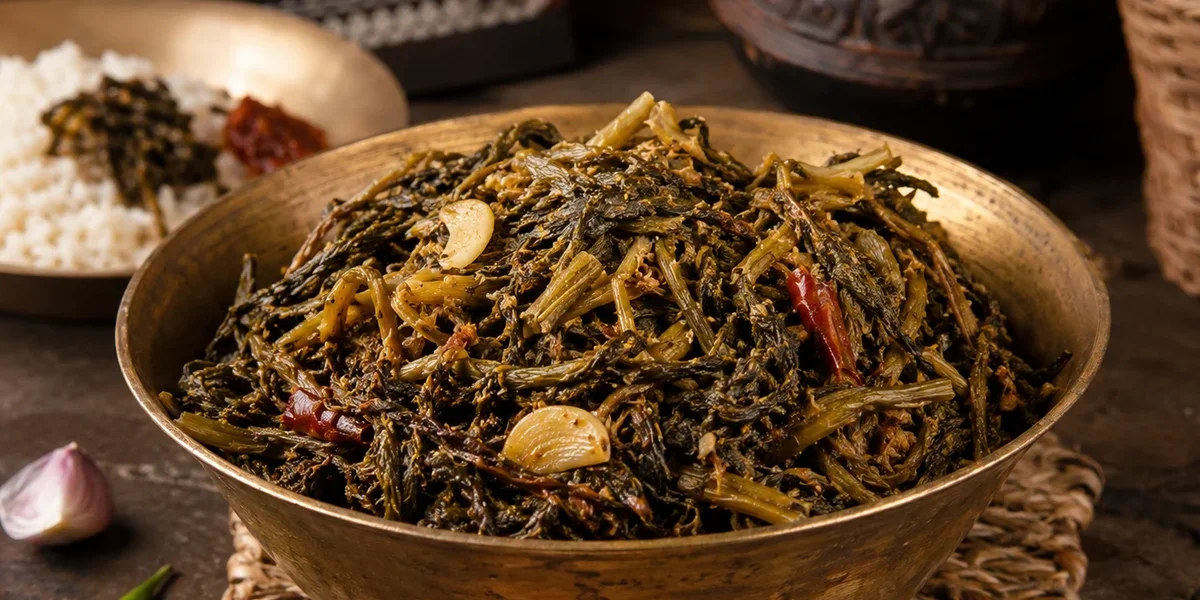
Gundruk is a fermented and sun-dried leafy vegetable that has sustained hill and mountain communities in Nepal for centuries. Made from radish leaves, mustard greens, cauliflower leaves, or cabbage, it began as a way to preserve abundant summer greens through the lean winter months when fresh vegetables were scarce. Today it's a defining flavor of Nepali cuisine, and modern food science has confirmed just how remarkable it really is.
One detail most recipes get wrong: authentic gundruk is fermented without added salt. The moisture and naturally occurring bacteria already present on the leaves drive the entire fermentation — making gundruk one of the few traditional salt-free vegetable ferments in the world, alongside its cousin sinki (made from radish taproot instead of leaves).
Use the freshest greens you can find — freshness directly affects how well fermentation kicks off. Wash thoroughly to remove dirt and grit, then drain well and shake off excess water.
Spread the washed greens in a sunny spot and let them wilt until they've lost roughly half their moisture — soft and pliable, not fully dried. Depending on the weather, this takes anywhere from a few hours to a full day.
Lightly crush or pound the wilted greens by hand or with a pestle to break down the plant fibers and release more moisture — this jump-starts fermentation. Pack the greens tightly into a clay pot or airtight container, pressing down firmly so there are no air pockets.
Weigh the greens down with a clean, heavy stone, cover the container, and keep it in a warm, dark spot. Traditional gundruk ferments for 5 to 10 days — faster in warm weather (5–7 days), longer in cold conditions (up to 10–12 days). Research into gundruk's microbiology shows the fermentation is driven in succession by Lactobacillus cellobiosus, then Pediococcus pentosaceus, and finally Lactobacillus plantarum — a chain of lactic acid bacteria that drops the pH from around 7 to roughly 4.5, which is exactly what gives gundruk its long shelf life and distinctive sourness.
Once the greens smell pleasantly sour and tangy, remove them and spread them on a bamboo tray or clean cloth in full sun for 2–3 days until completely dry, brittle, and lightweight. Properly dried gundruk keeps for months — sometimes years — without refrigeration.
Sinki is gundruk's close relative, fermented the same way but made from radish taproot instead of leaves. Both rely on the identical lactic-fermentation process, but sinki has a firmer bite and slightly different sourness — worth trying once you've mastered gundruk.
Soak dried gundruk in water for 15–20 minutes, then squeeze out the liquid. For a quick achar, sauté it in mustard oil with fenugreek seeds, cumin, garlic, and dried red chili. For the classic winter comfort dish gundruk ko jhol (soup), simmer the soaked gundruk with potatoes, tomatoes, and soybeans — a favorite alongside rice or dhindo, especially in the colder months.
Fresh, quality gundruk is available from hill-region sellers on FoodSansar — also check out our gundruk health benefits guide and gundruk achar recipe.
Yes — authentic traditional gundruk uses no added salt at all. The moisture and naturally occurring bacteria on the leaves themselves drive the entire fermentation, making it one of the few genuinely salt-free vegetable ferments anywhere in the world.
They're made the same way, but from different parts of the plant — gundruk is fermented from leafy greens (radish leaves, mustard greens, cauliflower leaves), while sinki is fermented from the radish taproot itself, giving it a firmer bite and slightly different sourness.
Both are traditional and it comes down to preference — achar (a quick sautéed pickle with mustard oil and spices) makes a punchy side dish, while gundruk ko jhol (simmered with potatoes, tomatoes, and soybeans) is the classic winter comfort soup eaten with rice or dhindo.
Share it with friends and help others discover great content!