Food Guides
Why Buy from Local Nepali Farmers: Health, Taste and Community
June 1, 2026 5 min read

Gundruk isn't just a way to eat greens when there's nothing fresh growing — the fermentation process behind it makes it genuinely nutritious. Here's why, explained simply.
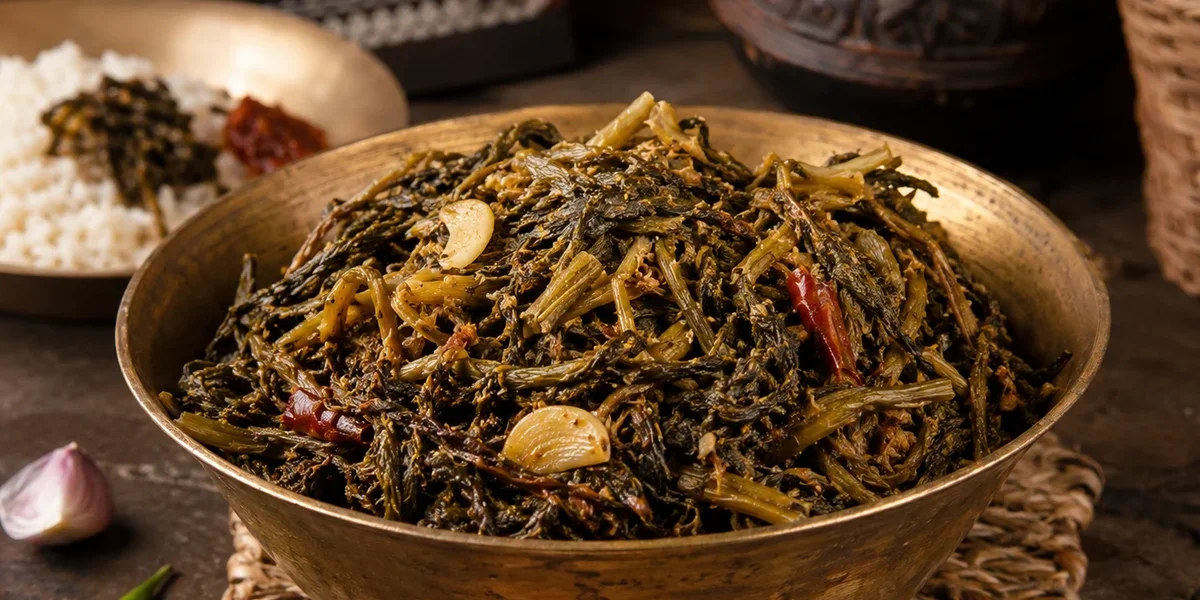
Fresh greens were hard to come by in hill regions during winter, so generations ago people figured out how to dry and ferment monsoon-season greens (radish, mustard, or cabbage leaves) to preserve them year-round. That's gundruk. Here's the interesting part: it was never just a storage trick — the fermentation process actually makes the greens more nutritious than they started out, something science is now confirming.
In plain terms, fermentation is a natural process where beneficial bacteria feed on the sugars and starches in the greens, producing acid and gas as a result. That's what gives gundruk its distinctive sour flavour, and it's also what creates the millions of beneficial bacteria (probiotics) inside it.
The probiotic bacteria in fermented food help maintain a healthy balance of bacteria in the gut, which makes digestion easier and can reduce bloating and constipation.
The fermentation process actually makes vitamin C and the B-vitamins in the greens easier for the body to absorb. Even dried, gundruk retains a good amount of iron and calcium.
Gundruk delivers the nutrition of leafy greens even in months when fresh vegetables aren't available — especially important for families in Himalayan regions where winter greens are scarce.
Gundruk uses very little oil, making it light and low in calories, while still delivering a rich, satisfying taste — a good option for anyone watching their weight.
Since gundruk (especially as achar) tends to be high in salt, it's best eaten in small portions alongside dal-bhat rather than in large quantities on its own. Even just 1-2 tablespoons a day is enough to get its benefits.
Fresh, quality gundruk is available from hill-region sellers on FoodSansar — also check out our gundruk recipe and gundruk achar recipe.
Share it with friends and help others discover great content!