Recipes
Traditional Gundruk Recipe: How to Make Nepal's Beloved Fermented Greens
May 28, 2026 8 min read

Sel roti is the ring-shaped, deep-fried sweet bread that fills Nepali homes during Dashain and Tihar. Crispy outside, soft inside, and carrying an 800-year history — here's how to make it right, with the story and technique behind it.
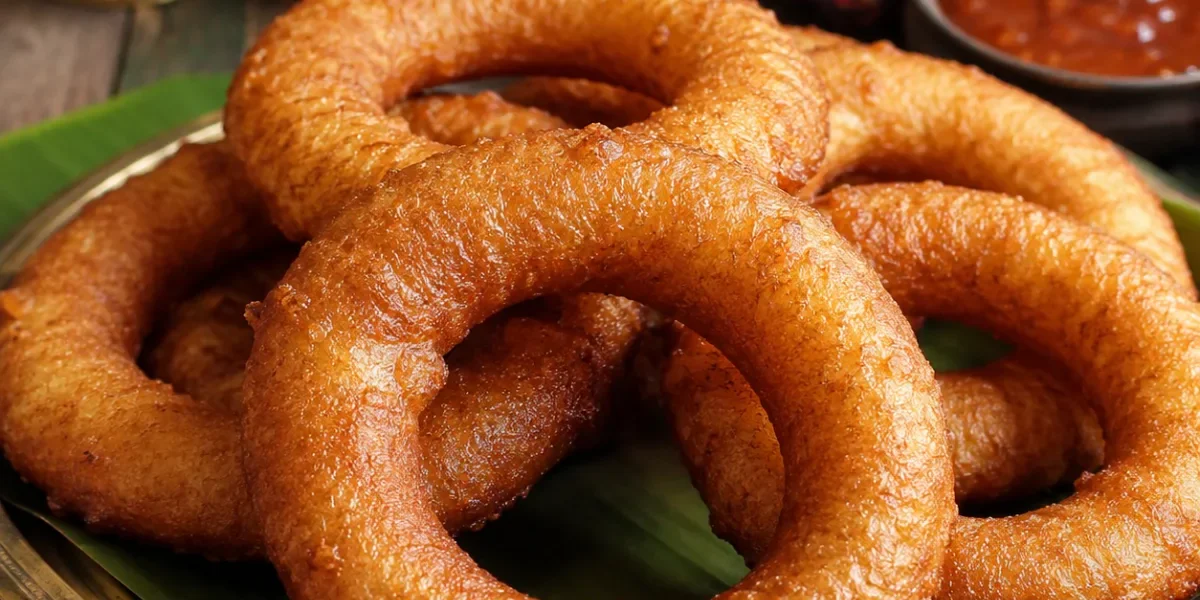
Sel roti is Nepal's traditional festive bread — a ring-shaped, deep-fried sweet made from rice flour, sugar, ghee, and cardamom. It appears at every major Nepali celebration: Dashain, Tihar, weddings, and family gatherings. Its defining characteristic is the contrast between a crispy, slightly crackling exterior and a soft, slightly chewy interior. The flavour is subtly sweet with a warm cardamom fragrance.
Unlike doughnuts, sel roti is not frosted or filled — its flavour comes entirely from the quality of the batter and the technique of frying.
Sel roti's history stretches back roughly 800 years, making it one of Nepal's oldest surviving dishes. According to Dinesh Raj Panta, a professor at Nepal Sanskrit University, sel roti began as a plain, unsweetened rice bread — over generations, as different ethnic communities blended their cooking traditions, sugar, ghee, and spices were layered in to create the version eaten today. It's believed to have evolved from babari, a rice-flour pancake cooked flat on a griddle from the same batter; frying that batter into a ring shape in hot oil is what eventually produced sel roti.
There are two competing theories on the name itself: one traces it to "sel," a variety of rice once grown in the Himalayan foothills; the other traces it to "saal," the Nepali word for "year," suggesting the bread was originally tied to the Nepali New Year rather than Dashain or Tihar specifically.
In Hindu tradition, a circle symbolizes eternity and completeness — making it a fitting shape for festivals that celebrate life, prosperity, and continuity. Making sel roti is often a family affair during Tihar: mothers and daughters mix the batter together while others take turns frying and cooling the rings, trading stories through the process. During Tihar, sel roti is offered first to the family deity before being distributed to every family member — a ceremonial role a doughnut never has to play.
Authentic sel roti starts with rice soaked 6–8 hours (or overnight), then ground wet in a stone grinder or blender to a slightly coarse paste. This gives a texture and flavour that instant rice flour cannot replicate. If using pre-ground rice flour, toast it lightly in a dry pan first to bring out more flavour.
Combine rice flour, sugar, ghee, cardamom, and fennel. Add water gradually, mixing to create a smooth, pourable batter — thicker than dosa batter but thinner than pancake batter. Test consistency: when you lift a spoon, the batter should fall in a slow, ribbon-like stream. A banana mashed in at this stage adds moisture and a subtle sweetness that traditional recipes prize.
Cover the batter and let it rest for at least 30 minutes before frying. This gives the flavours time to meld and lets the rice starch settle, which noticeably improves the texture once fried. Don't skip this step even when you're in a hurry.
Use a deep, heavy-bottomed wok or kadai. Heat oil to around 160–170°C (320–340°F) — moderate, not hot. Too hot and the outside chars before the inside cooks. Test by dripping a tiny amount of batter — it should rise slowly with gentle bubbling, not frantic splattering.
Traditionally a coconut shell with a small hole is used as a mould, but a plastic squeeze bottle, a piping bag, or even a ziplock bag with a corner snipped works perfectly. Pour the batter in a steady circular motion onto the oil surface, working from outside inward to form a ring. If the ring keeps spreading too wide, place a small heatproof bowl upside down in the centre of the pan to help it hold its shape. Size is flexible — large rings are more impressive, small ones are easier to control.
Fry on one side until golden, 3–4 minutes. Flip with a long bamboo skewer or chopstick — run it through the centre ring to turn. Fry the other side until evenly golden. The sel roti should have a crackly crust when tapped. Drain on a rack, not paper towel, to keep the bottom crispy.
Best eaten warm, with plain yoghurt (dahi) or sweet tea. During Tihar, sel roti is offered first to the family deity, then distributed to every family member. Leftovers keep well in an airtight container for 3–4 days and can be eaten at room temperature.
Yes — the mashed banana is optional and mainly there to add moisture and a softer crumb. Sel roti made without it will have a slightly firmer, more traditional texture, so leaving it out is completely fine.
Soaking rice for 6–8 hours (or overnight) before grinding softens it enough to produce a slightly coarse, wet paste rather than a fine dry flour — that texture is what gives authentic sel roti its characteristic crumb, which pre-ground rice flour alone can't quite replicate.
Stored in an airtight container, it stays good for 3–4 days at room temperature and can be eaten cold or gently reheated. It's best fresh and warm, but it doesn't spoil quickly thanks to the deep-frying.
Share it with friends and help others discover great content!