Recipes
Traditional Gundruk Recipe: How to Make Nepal's Beloved Fermented Greens
May 28, 2026 8 min read

Dhindo is a staple of Nepal's hill regions, made from buckwheat, maize, or millet flour, going back generations to places too high for rice. It looks simple, but getting the texture right takes a little practice — here's its history, regional variation, and the clear steps to get it right.
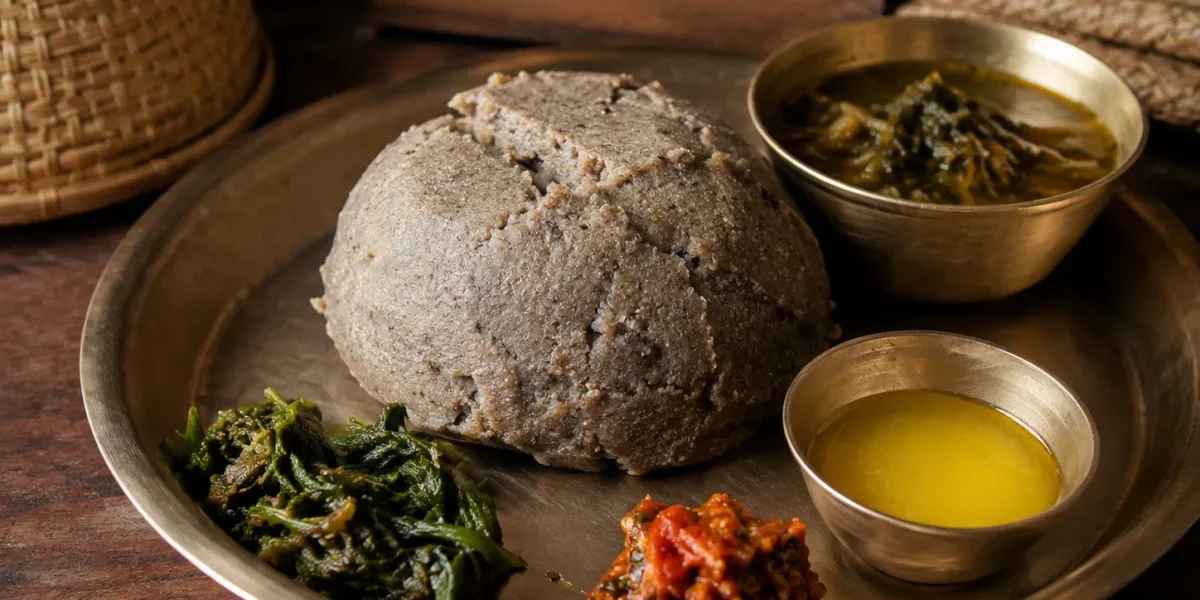
Dhindo has been eaten in Nepal's hill and Himalayan regions for generations, made by slowly stirring buckwheat, maize, or millet flour into boiling water until it thickens into a smooth dough-like porridge. Eaten in place of rice, it's naturally gluten-free, making it a solid option for anyone who avoids wheat. It looks easy to make, but getting a smooth, lump-free texture takes a bit of practice — follow the method below and yours should turn out well on the first try.
In the high hills and Himalayan regions where rice paddies simply aren't possible, buckwheat, maize, and millet were the crops that actually grew — which is exactly why dhindo became the everyday staple of these communities. It was once dismissed as a plain, humble food, but as awareness of indigenous crops and their nutritional value has grown, dhindo's popularity has followed — it now shows up as a specialty dish on menus in Kathmandu restaurants that once wouldn't have served it. Making and sharing dhindo as a group during family gatherings and festivals has also made it a symbol of unity and togetherness, and some communities even hold dedicated dhindo festivals. Alongside gundruk, it's often cited as one of the defining foods of Nepal's hill regions.
In the Himalayan and higher hill regions, fapar ko dhindo (buckwheat dhindo) is the more common version — dense and earthy, traditionally cooked slowly in an iron pot and served with gundruk or dal. Closer to the lower hills and transitional zones toward the Terai, makai ko dhindo (maize dhindo) is more common, producing a softer, mildly sweeter result. Some households mix buckwheat, maize, and millet flours together, which gives a distinct flavor and texture from any single flour on its own.
(That's genuinely all you need — dhindo is a simple, humble dish.)
Bring water to a boil in a pot with salt mixed in. Only add the flour once the water is fully boiling — adding it to cold or lukewarm water is what causes lumps.
With one hand, sprinkle in the flour a little at a time while continuously stirring with the other hand (or a wooden stick). This "sprinkle while stirring" technique is the actual secret to avoiding lumps — dumping in all the flour at once is what causes them.
Once all the flour is in, keep stirring continuously for another 5-7 minutes without pausing, over medium-low heat so it doesn't catch at the bottom of the pot. This is what fully cooks the flour and gives it a smooth texture. You'll know it's done when the mixture thickens and no longer sticks loosely to the stick.
Shape the hot dhindo into a round mound on a plate or bowl, and press a small hollow into the center — this is where you'll add dal or vegetable curry. Serve hot with dal, gundruk soup, or a vegetable curry.
Get these three things right and your dhindo will come out smooth, with no lumps.
Fresh buckwheat and maize flour are available from hill-region sellers on FoodSansar — make this traditional hill dish at home today.
Buckwheat gives the denser, earthier fapar ko dhindo more common in the higher hills, while maize flour makes a softer, mildly sweeter makai ko dhindo more typical of the lower hills. Neither is more "correct" — it's largely regional preference, and some households mix both with millet.
Yes to both — it's just flour, water, and salt, with no animal products or wheat involved, which is exactly why it's long been a safe staple for anyone who can't eat rice or wheat.
It almost always comes down to one of three things: adding the flour before the water is fully boiling, dumping in all the flour at once instead of sprinkling it gradually, or pausing the stirring while adding it. Get those three right and lumps stop happening.
Share it with friends and help others discover great content!