
Recipes
Traditional Gundruk Recipe: How to Make Nepal's Beloved Fermented Greens
May 28, 2026 8 min read

Here's why til ko laddu and ghee chaku are eaten on Maghe Sankranti, and an easy, step-by-step recipe for making both of these winter sweets at home.
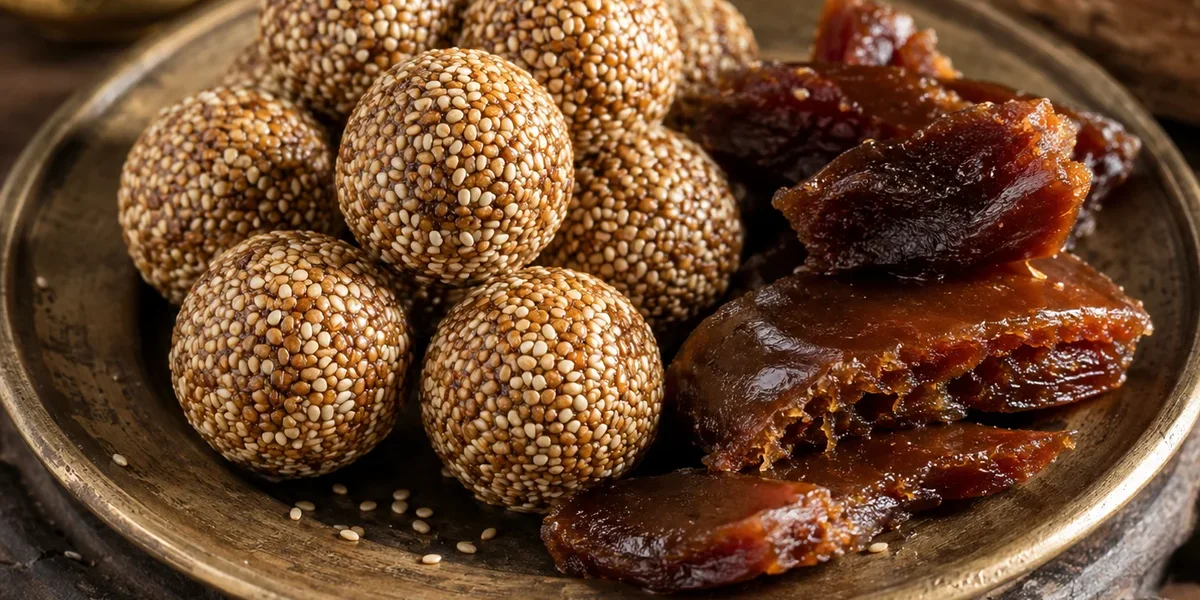
Maghe Sankranti (the start of the Magh month, usually falling around mid-January) marks the point where winter starts easing and days grow longer. It's traditional to eat warming foods like sesame, ghee, and chaku (jaggery) on this day, since Ayurvedic tradition holds that these foods help keep the body warm and energized through the rest of winter. Til ko laddu and ghee chaku are the two signature sweets made for the occasion.
Roast the sesame seeds in a dry pan over medium heat until lightly golden and fragrant, stirring constantly so they don't burn. Sesame seeds scorch easily, so stay attentive and don't step away from the heat.
In a separate pan, melt the chaku over medium heat with a splash of water until it becomes glossy and stretches like taffy.
Add the roasted sesame to the melted chaku and mix quickly — this needs to happen while the mixture is still hot, since it hardens and becomes difficult to work with once it cools.
Grease your hands with ghee (to protect them from the heat) and quickly shape small portions of the mixture into round balls. Shaping them before the mixture cools is the key part of this step.
Heat ghee in a pan, add the chaku, and melt it slowly over medium-low heat, stirring constantly.
Once fully melted, pour it in a thin layer onto a ghee-greased plate or tray.
While it's still slightly warm (not fully hardened), score light diamond-shaped lines with a knife, so it can be easily snapped into pieces once fully cooled.
Both sweets keep for 2-3 weeks at room temperature in an airtight container.
Fresh sesame seeds and chaku are available from sellers on FoodSansar — make these traditional sweets at home for Maghe Sankranti.
Jaggery-based sweets like til ko laddu have a long shelf life — up to one to two months if stored dry in an airtight container away from sunlight and humidity. Ghee-based sweets are best kept at room temperature for about 7–10 days, since refrigeration can harden the ghee and change the texture.
Both sesame (til) and ghee are considered warming, energy-dense foods in Nepali tradition, making them ideal for Maghe Sankranti, which falls in the coldest part of winter and marks the sun's northward journey — eating them is believed to help the body through the cold season.
You can, but you'll lose the deep, caramel-like flavor jaggery brings — jaggery is what gives both these sweets their characteristic taste, so it's worth sourcing if you want an authentic result.
Share it with friends and help others discover great content!