Farming Tips
Organic Farming in Nepal: A Beginner's Guide to Getting Started
May 22, 2026 7 min read

Potato is Nepal's most-consumed vegetable and one of the few crops you can plant twice a year. From variety selection to exact fertilizer doses, here's the full technical guide to growing it well.
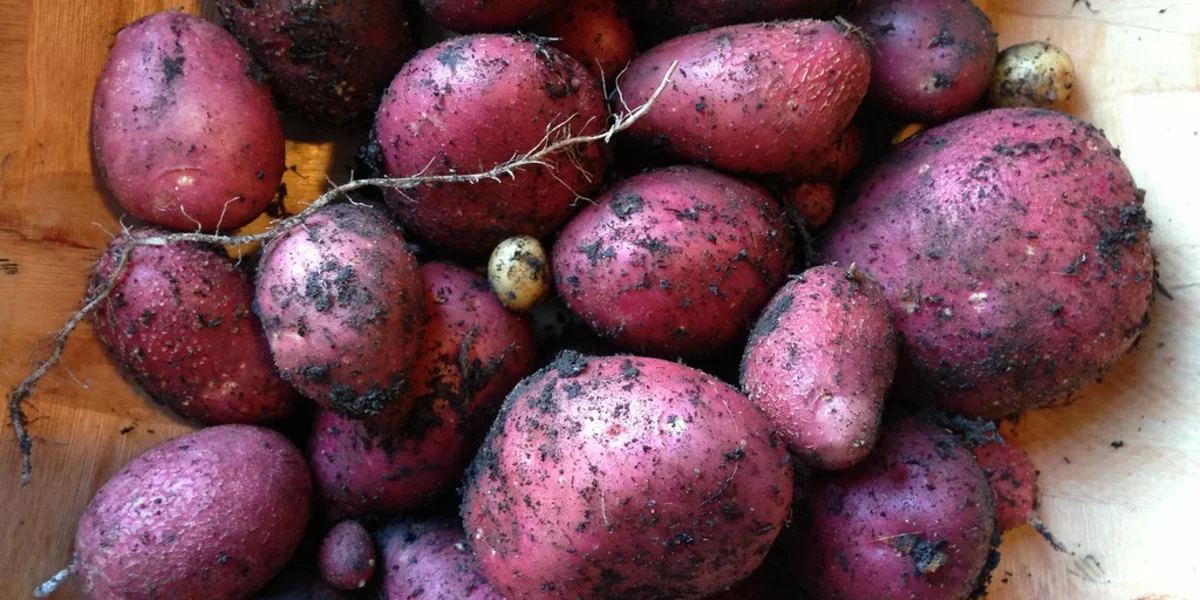
Potato (Solanum tuberosum L.) is Nepal's leading food and cash crop — the most widely consumed staple after rice and wheat. Because it can be planted twice a year, it gives farmers a steady, repeatable income source. Since it grows well in both hill and Terai regions, farmers in nearly every district can grow it.
Botanical classification: Kingdom – Plantae, Family – Solanaceae, Genus – Solanum, Species – tuberosum
Nepali farmers commonly grow varieties such as Khumal Seto, Khumal Rato, Jyoti, Super Chinsona, and Kunwari Pyaro. Check with your local agriculture knowledge center or seed supplier to choose a variety suited to your area's climate and market demand.
Many farmers also plant twice a year — a spring crop (planted Magh-Falgun, harvested Baisakh-Jestha) and an autumn crop (planted Bhadra-Ashwin, harvested Mangsir-Poush) — across both seasons.
You'll need 1500-2500 kg of seed potatoes per hectare. Choose only disease-free, healthy, uniformly sized (30-50g) certified seed potatoes. Before planting, let seed potatoes sit in bright but indirect light to develop small sprouts (a process called greening) — this improves germination rate significantly.
Plough the field deeply 2-3 times to loosen the soil, break up clods, clear weeds, and form raised beds (ridges). Work 8-10 quintals of farmyard manure per ropani into the soil. Plant seed potatoes 8-10cm deep, spacing rows 60-75cm apart and plants 20-25cm apart within the row.
Apply half the fertilizer as a basal dose at planting, and the remaining half during earthing up.
Do the first earthing up (hilling soil around the base of the plants) 20-25 days after planting, then a second round at 40-45 days. This protects developing tubers from sunlight, which otherwise turns them green, and supports stronger tuber development.
Always follow label dosage and safety instructions when applying any fungicide, or check with your local agrovet.
Potatoes are ready to harvest 90-110 days after planting, once the plant's leaves yellow and begin drying. After harvest, dry the tubers in shade for 2-3 days, then store in a dark, cool, well-ventilated space — exposure to light turns potatoes green and makes them toxic.
With good management, you can expect 20-25 metric tons per hectare — roughly 10-13 quintals per ropani.
Disease-free seed, balanced fertilizer, consistent irrigation, and timely earthing up together make the biggest difference in final yield.
Since potato is used daily in nearly every Nepali kitchen, demand stays steady year-round. Selling directly to customers through FoodSansar provides a more stable income, less exposed to market swings than selling through middlemen.
Share it with friends and help others discover great content!