Farming Tips
Organic Farming in Nepal: A Beginner's Guide to Getting Started
May 22, 2026 7 min read

If you save seed from your best harvest, you don't have to buy new seed year after year. Here's a simple guide to which crops to save, how to dry them, and how to store them.
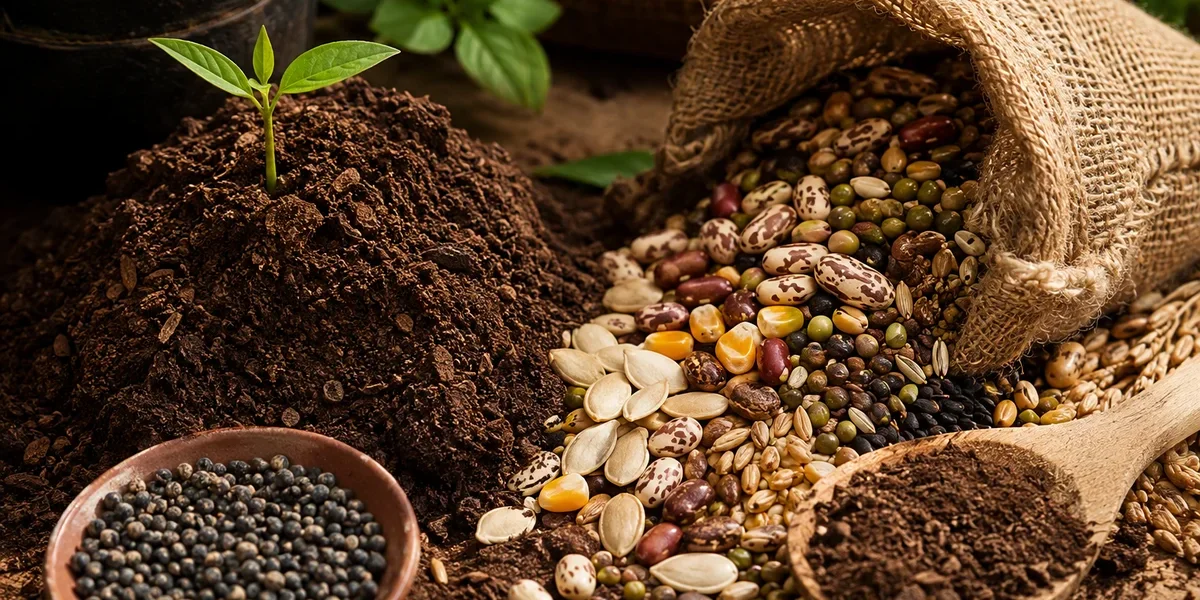
Instead of buying new seed from the market every season, saving seed from your own best harvest can save real money over time. It also means the seed becomes better adapted to your specific land and climate year after year, since you're continuously selecting from plants that have already proven they grow well in your conditions — it's really a long-term investment.
Not every crop's seed saves well. Local and traditional varieties (many lentils — black gram, horse gram, kidney beans; vegetables — okra, beans, bottle gourd) produce a similarly good crop the next season when saved this way. Hybrid varieties, however, often don't give the same quality in the next generation, so it's best to buy fresh hybrid seed each time rather than save it.
Pick the healthiest, most productive, disease-free plant in your field. Only take seed from that plant — saving seed from a weak plant tends to produce an even weaker next generation.
Only pick the fruit or grain chosen for seed once it's fully ripe and has started drying on the plant itself — seed harvested while still underripe germinates poorly.
Dry the harvested seed in shade, not direct sun. It's fully dry once it snaps or breaks easily by hand. Storing seed that isn't fully dry carries a high risk of mould.
Sort out husks, dust, and any damaged-looking grains from the dried seed. Only clean seed stores well and is less likely to attract pests in storage.
Properly dried and stored seed usually keeps its germination ability for 1-3 years, but it's worth testing a few seeds each year to check the germination rate — that way there are no surprises at planting time.
Storing seed before it's fully dry is the most common mistake, and it can ruin an entire batch with mould. Don't rush this step — confirm the seed is completely dry before putting it away.
Building a seed-saving habit frees farmers from depending on the market every season and adds up to real savings over the long run.
Share it with friends and help others discover great content!