Farming Tips
Organic Farming in Nepal: A Beginner's Guide to Getting Started
May 22, 2026 7 min read

Shrawan (mid-July to mid-August) brings full monsoon and the year's heaviest rainfall. Drainage is everything this month — it's also the traditional time to plant gundruk greens.
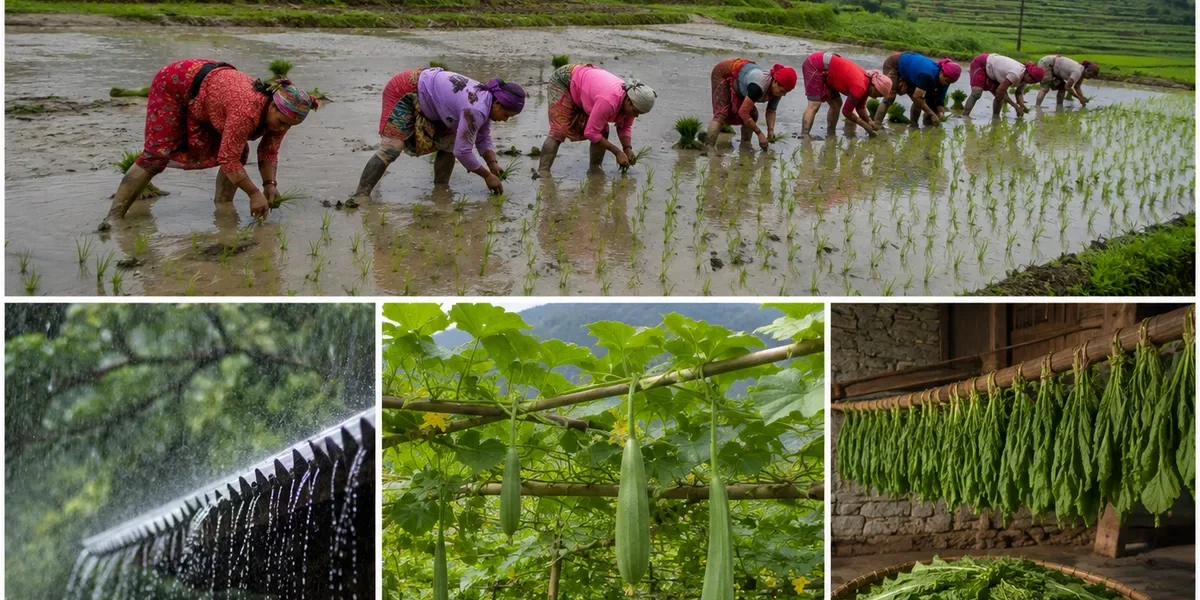
Shrawan (mid-July to mid-August) is full monsoon — the heaviest rainfall of the year. With rain falling almost continuously, drainage management is this month's central challenge.
During Shrawan's heavy rain, many farmers plant in low, flat ground where water easily pools. More vegetable crops are lost to waterlogged, rotted roots in this month than for any other reason. Build raised beds before the monsoon peaks, and keep a close eye on tomato and potato for blight, a fungal disease that spreads fast in wet conditions.
For monsoon pest and disease control, see our monsoon vegetable pest and disease guide, and for the traditional method, our traditional gundruk recipe. Look back at what to plant in Ashar, or ahead to what to plant in Bhadra.
Waterlogging — more vegetable crops are lost to pooled water and root rot in Shrawan than for any other reason, so raised beds matter a great deal.
Shrawan is the traditional month to plant mustard or radish greens that are later fermented and dried into gundruk.
Share it with friends and help others discover great content!